Author: umk

  • Cybersecurity – Protecting Data in a Digital World

    In today’s digital era, almost every aspect of our personal and professional lives depends on technology. From banking and healthcare to communication and entertainment, vast amounts of data are generated and shared online every second. While this connectivity brings convenience and efficiency, it also exposes individuals, businesses, and governments to cyber threats. Cybersecurity has therefore become critical for safeguarding sensitive information, maintaining trust, and protecting digital infrastructure.

    In this article, we will explore what cybersecurity is, common threats, key strategies, real-world applications, challenges, and the future of protecting data in a hyper-connected world.


    What Is Cybersecurity?

    Cybersecurity refers to the practice of protecting computer systems, networks, software, and data from unauthorized access, attacks, or damage. It encompasses technologies, processes, and practices designed to ensure:

    • Confidentiality: Keeping data private and accessible only to authorized users.
    • Integrity: Ensuring information is accurate and unaltered.
    • Availability: Ensuring systems and data are accessible when needed.

    Leading companies like CrowdStrike and Palo Alto Networks provide advanced cybersecurity solutions for businesses and governments worldwide.


    Common Cyber Threats

    1. Malware

    Malicious software such as viruses, worms, trojans, and ransomware can damage systems, steal data, or disrupt operations.

    2. Phishing Attacks

    Fraudulent emails, messages, or websites trick users into revealing sensitive information, such as passwords or banking details.

    3. Denial-of-Service (DoS) Attacks

    Hackers overwhelm networks or servers with traffic, causing downtime and disruption of services.

    4. Data Breaches

    Unauthorized access to databases can result in sensitive personal or corporate information being stolen or leaked.

    5. Insider Threats

    Employees or contractors with access to systems may misuse their privileges, either intentionally or accidentally, causing security risks.


    Cybersecurity Strategies

    Effective cybersecurity requires multiple layers of protection across systems, networks, and users. Key strategies include:

    1. Network Security

    • Firewalls and intrusion detection/prevention systems monitor and block malicious activity.
    • Virtual private networks (VPNs) protect data transmission over the internet.

    2. Endpoint Security

    • Antivirus and anti-malware software protect devices such as computers, smartphones, and IoT devices.
    • Device management ensures that all endpoints comply with security policies.

    3. Data Encryption

    • Sensitive data is encrypted to prevent unauthorized access, both at rest and during transmission.

    4. Access Control and Authentication

    • Multi-factor authentication (MFA) ensures only authorized users can access systems.
    • Role-based access restricts sensitive information to necessary personnel.

    5. Security Awareness Training

    • Educating employees about phishing, password hygiene, and safe online practices reduces human-related vulnerabilities.

    Real-World Applications

    1. Financial Sector

    • Protecting online banking and payment systems from fraud.
    • Safeguarding customer financial data and transactions.

    2. Healthcare

    • Securing electronic health records (EHRs) and patient information.
    • Ensuring medical devices connected to networks are protected.

    3. Government and Critical Infrastructure

    • Protecting national security, power grids, and transportation systems.
    • Preventing cyberattacks on sensitive public and defense data.

    4. Corporate Sector

    • Securing intellectual property, trade secrets, and corporate communications.
    • Protecting supply chains from cyber risks.

    Benefits of Cybersecurity

    • Data Protection: Ensures sensitive information remains secure.
    • Operational Continuity: Prevents downtime and maintains productivity.
    • Trust and Reputation: Builds confidence among customers, partners, and stakeholders.
    • Regulatory Compliance: Meets legal and industry standards for data protection.
    • Risk Management: Reduces financial losses from cyberattacks.

    Challenges in Cybersecurity

    • Rapidly Evolving Threats: Hackers continuously develop new attack methods.
    • Complex IT Environments: Increasingly interconnected systems are harder to secure.
    • Shortage of Skilled Professionals: Demand for cybersecurity experts exceeds supply globally.
    • Compliance and Regulations: Organizations must navigate complex international laws.
    • Insider Threats and Human Error: Employees remain a common source of security breaches.

    Emerging Technologies in Cybersecurity

    1. Artificial Intelligence and Machine Learning

    AI helps detect unusual patterns, predict attacks, and respond in real time.

    2. Blockchain

    Provides tamper-proof and decentralized data storage to prevent fraud.

    3. Cloud Security Solutions

    Protect cloud-based applications and storage from unauthorized access.

    4. Zero-Trust Architecture

    Assumes no user or device is inherently trustworthy, enforcing strict verification for every access request.


    The Future of Cybersecurity

    The future of cybersecurity will be shaped by:

    • Integration of AI for proactive threat detection.
    • Enhanced protection for IoT devices and smart cities.
    • Quantum-resistant encryption to prepare for future quantum computing threats.
    • Automation of security operations to reduce human error.
    • Greater emphasis on privacy, compliance, and ethical data handling.

    Cybersecurity will continue to evolve as digital ecosystems expand, making it essential for businesses, governments, and individuals to stay vigilant and adaptive.


    Conclusion

    Cybersecurity is no longer optional—it is a critical foundation for the digital world. Companies like CrowdStrike and Palo Alto Networks are leading innovations that protect organizations from evolving cyber threats.

    While challenges such as sophisticated attacks, skill shortages, and compliance issues persist, proactive security measures, advanced technologies, and global collaboration can safeguard data, infrastructure, and personal privacy.

    In a world where technology drives everything from finance to healthcare, strong cybersecurity ensures that progress continues safely and securely.

  • Internet of Things (IoT) – Connecting the World

    The digital revolution has transformed the way we live, work, and interact with technology. One of the most transformative innovations in recent years is the Internet of Things (IoT)—a network of interconnected devices that communicate and exchange data seamlessly. From smart homes to industrial automation, IoT is creating a world where everything is connected, intelligent, and responsive.

    In this article, we will explore what IoT is, how it works, its applications across industries, challenges, and the future of a fully connected world.


    What Is the Internet of Things?

    The Internet of Things refers to a system of physical devices embedded with sensors, software, and connectivity, allowing them to collect, share, and act on data. These devices range from everyday household items to complex industrial machinery.

    IoT enables devices to:

    • Monitor conditions in real time
    • Communicate with other devices or systems
    • Automate processes without human intervention

    Companies like Cisco and Siemens are leading the development of IoT solutions that power both consumer and industrial applications.


    How IoT Works

    IoT systems rely on several core components:

    1. Sensors and Actuators – Devices that gather data from the environment or perform actions.
    2. Connectivity – Wireless protocols such as Wi-Fi, Bluetooth, 5G, or LPWAN allow devices to communicate.
    3. Data Processing – Cloud or edge computing analyzes the collected data to provide insights.
    4. User Interface – Applications or dashboards allow humans to monitor, control, and make decisions.

    This combination creates a feedback loop where devices continuously interact with their environment and adapt based on data.


    Applications of IoT

    1. Smart Homes

    IoT is transforming residential life:

    • Smart thermostats adjust temperatures automatically.
    • Security cameras and sensors provide remote monitoring.
    • Smart lighting and appliances optimize energy usage.
    • Voice assistants like Amazon Echo and Google Home enable hands-free control.

    Smart homes provide convenience, efficiency, and security for modern lifestyles.


    2. Healthcare

    IoT is revolutionizing healthcare:

    • Wearable devices monitor heart rate, glucose, and activity levels.
    • Remote patient monitoring allows doctors to track conditions in real time.
    • Connected medical devices improve hospital efficiency and patient safety.

    Healthcare IoT reduces response times, lowers costs, and enhances patient outcomes.


    3. Industrial IoT (IIoT)

    Industrial IoT applies connected devices in manufacturing and logistics:

    • Predictive maintenance detects equipment issues before failures.
    • Supply chain tracking monitors shipments and inventory in real time.
    • Automated production systems increase efficiency and reduce waste.

    Companies like Siemens are implementing IIoT solutions that transform factories into smart, data-driven operations.


    4. Smart Cities

    IoT is essential for developing smart cities:

    • Traffic lights and signals adjust based on congestion.
    • Waste management systems optimize collection routes.
    • Energy grids monitor consumption to reduce waste.
    • Public safety sensors improve emergency response.

    Connected urban infrastructure enhances quality of life, sustainability, and safety.


    5. Agriculture

    IoT is changing agriculture through precision farming:

    • Soil sensors monitor moisture and nutrient levels.
    • Drones survey crops and detect issues.
    • Automated irrigation systems save water and improve yield.

    Farmers can make data-driven decisions to maximize productivity and sustainability.


    Benefits of IoT

    • Efficiency: Automation reduces human labor and errors.
    • Cost Savings: Predictive maintenance and energy optimization lower operational costs.
    • Data-Driven Insights: Real-time analytics enable smarter decisions.
    • Convenience: Everyday tasks are simplified through connected devices.
    • Sustainability: Optimized resource usage reduces environmental impact.

    The combination of IoT and data analytics provides organizations with unprecedented visibility and control.


    Challenges and Concerns

    Despite its advantages, IoT faces several challenges:

    1. Security and Privacy

    Connected devices collect sensitive information. Weak security can lead to hacking, data breaches, and unauthorized surveillance.

    2. Interoperability

    IoT devices from different manufacturers may use incompatible protocols, making integration complex.

    3. Data Management

    The sheer volume of data generated by IoT devices can overwhelm systems without proper storage and analytics solutions.

    4. Cost and Infrastructure

    Implementing IoT networks requires investment in sensors, connectivity, and cloud infrastructure, which may be expensive for smaller organizations.


    The Role of 5G and Edge Computing

    The growth of IoT relies heavily on advanced connectivity and computing.

    • 5G networks enable low-latency, high-bandwidth communication for real-time IoT applications.
    • Edge computing processes data closer to devices, reducing delays and improving efficiency.

    These technologies are critical for autonomous vehicles, industrial automation, and smart city systems.


    Future of IoT

    The future of IoT includes:

    • Fully autonomous smart cities with intelligent infrastructure
    • Connected healthcare ecosystems with predictive patient care
    • AI-powered industrial IoT systems for zero-downtime manufacturing
    • Integration with blockchain for secure and transparent IoT transactions
    • Expansion into consumer wearables, vehicles, and home automation

    IoT will continue to merge the physical and digital worlds, creating a hyper-connected global ecosystem.


    Conclusion

    The Internet of Things is no longer a futuristic concept—it is a reality that is transforming industries, cities, and daily life. Companies like Cisco and Siemens are leading the way in building smart, connected systems that drive efficiency, convenience, and sustainability.

    While challenges such as security, interoperability, and infrastructure remain, the long-term potential of IoT is enormous. As more devices become connected and intelligent, the world will become more responsive, efficient, and integrated than ever before.

  • Hello world!

    Welcome to WordPress. This is your first post. Edit or delete it, then start writing!

  • Robotics and Automation – The Rise of Intelligent Machines

    The 21st century is witnessing a rapid transformation in industries, workplaces, and daily life due to robotics and automation. Machines are no longer just tools—they are becoming intelligent collaborators capable of performing complex tasks with precision, speed, and efficiency. From manufacturing floors to hospitals, from autonomous vehicles to household robots, automation is redefining how humans live and work.

    In this article, we will explore the evolution of robotics, the role of automation in modern industries, emerging technologies, challenges, and what the future holds for intelligent machines.


    What Are Robotics and Automation?

    Robotics is the branch of technology focused on designing, building, and operating robots—machines capable of performing tasks automatically or under human control.

    Automation refers to using technology to perform tasks without human intervention. While robotics often involves physical machines, automation also includes software-driven processes such as AI-powered systems, workflow automation, and robotic process automation (RPA).

    Leading companies like Boston Dynamics and ABB are pioneering both industrial and service robotics.


    The Evolution of Robotics

    Robotics has evolved in multiple stages:

    1. Industrial Robots (1960s–1980s) – Machines that performed repetitive tasks on manufacturing lines.
    2. Service Robots (1990s–2010s) – Robots for healthcare, cleaning, and customer service.
    3. Intelligent Robots (2010s–present) – AI-powered robots capable of decision-making, learning, and collaboration with humans.

    The integration of AI, sensors, and advanced actuators is enabling robots to perform tasks that were once considered uniquely human.


    Applications of Robotics and Automation

    1. Manufacturing and Industry

    Robotics has transformed the manufacturing sector by improving efficiency, reducing costs, and enhancing precision.

    • Automotive assembly lines use robotic arms for welding, painting, and quality control.
    • Electronics production relies on robots for soldering and assembly.
    • Material handling and logistics are increasingly automated using autonomous guided vehicles (AGVs).

    Automation allows companies to maintain high production standards while minimizing human error.


    2. Healthcare and Medical Robotics

    Robots are revolutionizing healthcare:

    • Surgical robots enable minimally invasive procedures with high precision.
    • Rehabilitation robots assist patients in recovering mobility.
    • AI-powered diagnostic robots analyze medical data to detect diseases early.

    Hospitals worldwide are adopting robotics to enhance patient care and reduce operational workloads.


    3. Autonomous Vehicles and Drones

    Robotics is central to autonomous transportation:

    • Self-driving cars use sensors, AI, and robotics to navigate roads safely.
    • Delivery drones transport packages in urban areas.
    • Agricultural robots automate planting, harvesting, and monitoring crops.

    These technologies improve efficiency while reducing human labor and risk.


    4. Service and Household Robots

    Robots are entering homes and businesses:

    • Vacuuming robots and smart home assistants make daily tasks easier.
    • Customer service robots in hotels and airports assist guests.
    • Companion robots provide social interaction and support for the elderly.

    Consumer robotics is expanding rapidly, offering convenience and new experiences.


    5. Space Exploration

    Robots play a crucial role in space:

    • Rovers explore Mars and other celestial bodies.
    • Robotic arms maintain satellites and space stations.
    • Autonomous spacecraft perform deep-space missions.

    Companies like NASA and SpaceX use robotics to achieve tasks too dangerous or impossible for humans.


    Benefits of Robotics and Automation

    • Increased Productivity: Robots work continuously without fatigue.
    • Higher Accuracy: Automation reduces human errors.
    • Safety: Dangerous tasks are handled by machines instead of humans.
    • Cost Reduction: Long-term labor costs decrease with automation.
    • Innovation: Robots enable tasks and experiments that were previously impossible.

    Industries adopting intelligent machines are gaining a competitive advantage in efficiency and innovation.


    Challenges and Concerns

    Despite its benefits, robotics and automation raise several challenges:

    1. Job Displacement

    Automation can replace repetitive and manual jobs, creating employment concerns.

    2. High Initial Costs

    Advanced robotic systems require significant upfront investment.

    3. Security Risks

    Connected robots and automated systems can be vulnerable to cyberattacks.

    4. Ethical and Social Implications

    Human-robot interaction raises questions about safety, accountability, and social impact.

    Addressing these challenges requires careful planning, workforce reskilling, and regulatory oversight.


    The Role of Artificial Intelligence in Robotics

    AI and robotics are closely linked:

    • Machine Learning allows robots to learn from experience.
    • Computer Vision enables robots to “see” and interpret environments.
    • Natural Language Processing allows robots to understand and respond to human speech.

    Intelligent robots are evolving from programmed machines to adaptive collaborators, capable of working alongside humans in dynamic environments.


    The Future of Robotics and Automation

    The next decade may bring:

    • Fully autonomous factories and warehouses
    • AI-powered personal assistants capable of complex decision-making
    • Swarms of collaborative drones for logistics, agriculture, and surveillance
    • Humanoid robots in healthcare, education, and hospitality
    • Integration of robotics with IoT and 5G for seamless smart environments

    These advancements will redefine productivity, convenience, and innovation across all sectors.


    Conclusion

    Robotics and automation represent a major technological revolution with far-reaching implications. Companies like Boston Dynamics and ABB are leading the development of intelligent machines capable of enhancing human productivity and improving quality of life.

    While challenges such as job displacement, security risks, and ethical concerns remain, the future of robotics promises smarter, faster, and safer systems across industries, homes, and even outer space.

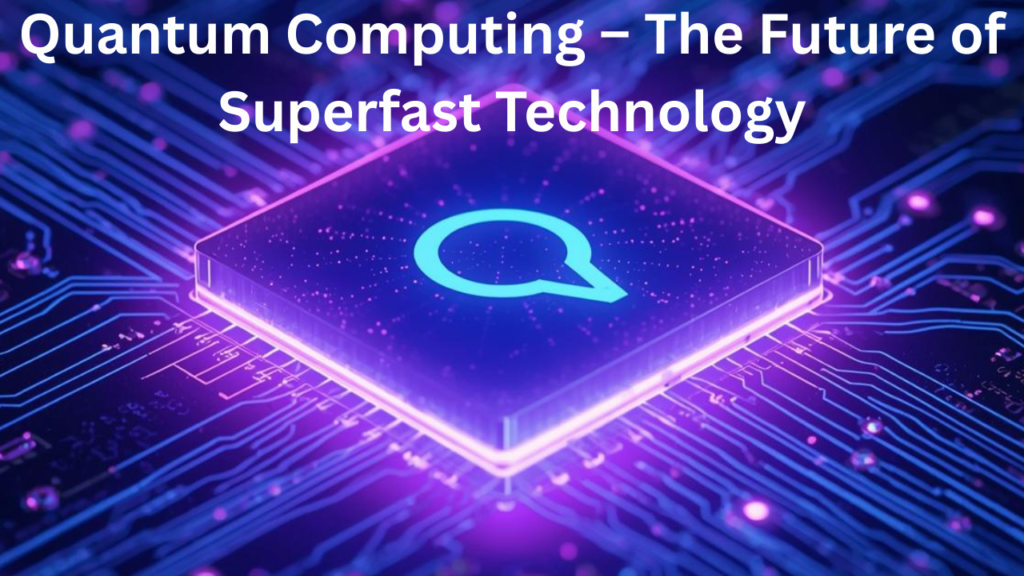
  • Quantum Computing – The Future of Superfast Technology

    In the world of technology, speed and processing power define progress. From the first mechanical computers to today’s supercomputers, innovation has always focused on making machines faster and more powerful. Now, a revolutionary breakthrough is emerging that could change computing forever—Quantum Computing.

    Unlike traditional computers that process information in binary (0s and 1s), quantum computers use the principles of quantum mechanics to perform calculations at speeds unimaginable with current technology. This advancement has the potential to solve problems that would take classical computers thousands or even millions of years.

    In this article, we will explore what quantum computing is, how it works, its real-world applications, challenges, and what the future may hold.


    What Is Quantum Computing?

    Quantum computing is a new type of computing based on the laws of quantum mechanics—the science that explains how particles behave at the atomic and subatomic level.

    Traditional computers use bits, which can be either 0 or 1. Quantum computers use qubits (quantum bits), which can exist as 0, 1, or both simultaneously due to a property called superposition.

    This unique capability allows quantum computers to process vast amounts of data in parallel rather than sequentially.

    Technology companies like IBM and Intel are investing heavily in quantum research to develop practical quantum machines.


    Key Principles of Quantum Computing

    1. Superposition

    A qubit can exist in multiple states at the same time. This allows quantum computers to explore many possibilities simultaneously.


    2. Entanglement

    When qubits become entangled, the state of one qubit instantly affects the state of another, even if they are far apart. This property enables extremely powerful computations.


    3. Quantum Interference

    Quantum systems use interference to amplify correct solutions and cancel out incorrect ones during calculations.


    How Quantum Computers Differ from Classical Computers

    Classical computers process information step by step. Even the most advanced supercomputers rely on binary logic.

    Quantum computers, however:

    • Perform multiple calculations at once
    • Solve complex optimization problems faster
    • Break certain encryption systems
    • Simulate molecular structures accurately

    This makes them ideal for solving problems that are currently beyond classical computing limits.


    Real-World Applications of Quantum Computing

    1. Drug Discovery and Healthcare

    Quantum computers can simulate molecules at the atomic level. This could:

    • Speed up drug development
    • Improve disease modeling
    • Enable personalized medicine

    Pharmaceutical companies are exploring quantum computing to reduce research time from years to months.


    2. Cryptography and Cybersecurity

    Quantum computing poses both a threat and an opportunity for cybersecurity.

    It could:

    • Break current encryption methods
    • Enable quantum-resistant encryption
    • Create ultra-secure communication systems

    Governments and tech firms are preparing for a future where traditional encryption may no longer be safe.


    3. Financial Modeling

    Financial institutions can use quantum computing for:

    • Risk analysis
    • Portfolio optimization
    • Fraud detection
    • Market prediction

    Complex financial simulations that currently take hours could be completed in seconds.


    4. Artificial Intelligence

    Quantum computing may significantly enhance AI systems by:

    • Accelerating machine learning algorithms
    • Improving pattern recognition
    • Optimizing neural networks

    The combination of AI and quantum technology could unlock unprecedented computational power.


    5. Climate Modeling

    Accurate climate prediction requires analyzing massive datasets. Quantum computing could:

    • Improve weather forecasting
    • Model climate change scenarios
    • Optimize renewable energy systems

    This may help governments make better environmental decisions.


    Current Progress in Quantum Technology

    Major technology leaders are racing to build stable quantum systems.

    IBM has introduced quantum processors and cloud-based quantum access platforms for researchers worldwide.

    Intel is developing scalable quantum chips with improved stability.

    While fully functional large-scale quantum computers are still in development, rapid progress suggests they may become practical within the next decade.


    Challenges Facing Quantum Computing

    Despite its enormous potential, quantum computing faces serious obstacles.

    1. Qubit Stability

    Qubits are extremely sensitive to environmental disturbances. Even small vibrations or temperature changes can cause errors.


    2. Error Correction

    Quantum systems require advanced error correction methods to ensure accurate results.


    3. High Costs

    Building and maintaining quantum computers requires specialized environments, such as near-absolute-zero temperatures.


    4. Limited Scalability

    Scaling quantum computers from dozens to thousands or millions of qubits remains a major engineering challenge.


    The Future of Quantum Computing

    The future of quantum computing may include:

    • Hybrid systems combining classical and quantum processors
    • Cloud-based quantum services
    • Quantum internet networks
    • Breakthrough scientific discoveries

    Quantum computing is unlikely to replace classical computers entirely. Instead, it will work alongside them to solve highly complex problems.


    Will Quantum Computers Change the World?

    Yes—but gradually.

    Quantum computing will likely impact industries such as healthcare, finance, cybersecurity, and scientific research first. Over time, its influence may expand into everyday technologies.

    Just as classical computers transformed society in the 20th century, quantum computing may define the technological revolution of the 21st century.


    Conclusion

    Quantum computing represents one of the most exciting advancements in modern technology. By leveraging the principles of superposition and entanglement, it offers computational power far beyond traditional machines.

    With companies like IBM and Intel leading research efforts, the dream of practical quantum computers is steadily becoming reality.

    Although challenges such as stability, cost, and scalability remain, the long-term potential of quantum computing is enormous.

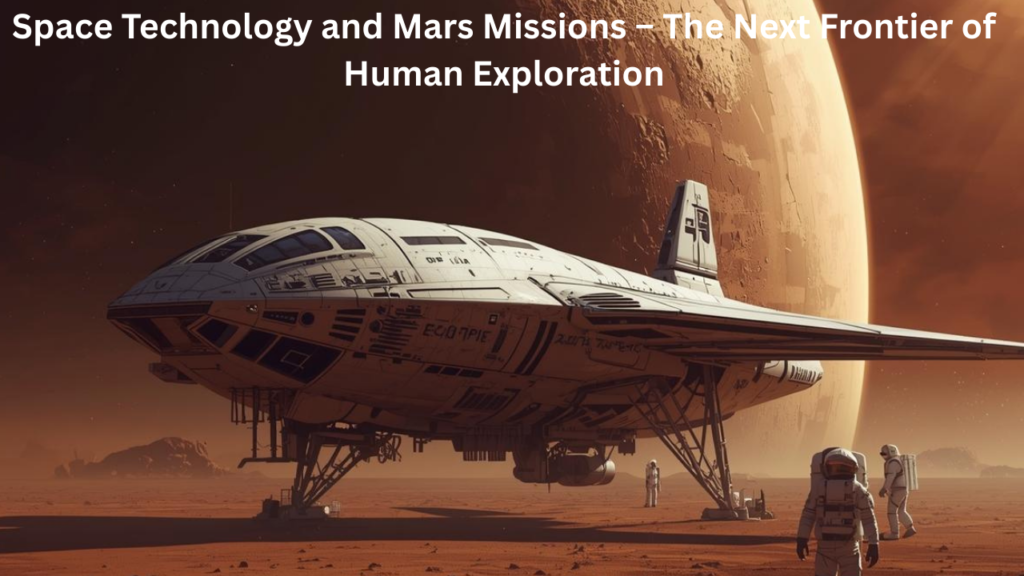
  • Space Technology and Mars Missions – The Next Frontier of Human Exploration

    Humanity has always looked toward the stars with curiosity and ambition. From the first satellite launch to landing on the Moon, space exploration has defined technological progress for decades. Today, space technology is advancing faster than ever, with new missions targeting Mars, deep space exploration, and even the possibility of human settlement beyond Earth.

    Modern space exploration is no longer limited to government agencies. Private companies are now playing a crucial role in reshaping the future of space travel. In this article, we will explore the evolution of space technology, Mars missions, private sector involvement, challenges, and the long-term vision for interplanetary life.


    The Evolution of Space Technology

    Space exploration began during the Cold War era, when nations competed to achieve milestones in orbit and beyond. Over time, technology improved dramatically.

    Early missions focused on:

    • Launching satellites
    • Human spaceflight
    • Moon exploration

    Today, space agencies like NASA and private companies such as SpaceX are pushing the boundaries of what is possible.

    Advancements in computing, robotics, materials science, and propulsion systems have made space missions more efficient and cost-effective.


    Why Mars?

    Mars has become the primary target for future exploration due to several reasons:

    • It has seasons and weather patterns.
    • Evidence suggests water once existed there.
    • It has a day length similar to Earth.
    • It may support future human settlement.

    Scientists believe that studying Mars can help answer one of humanity’s biggest questions: Has life ever existed beyond Earth?


    Robotic Missions to Mars

    Before humans can travel to Mars, robotic missions are paving the way.

    Mars rovers have successfully:

    • Collected soil samples
    • Analyzed atmospheric composition
    • Searched for signs of ancient life
    • Mapped the Martian surface

    NASA has launched several successful Mars missions, including rovers designed to explore the planet’s geology and climate history.

    These missions provide valuable data that helps prepare for future human exploration.


    The Rise of Private Space Companies

    In recent years, private companies have transformed the space industry.

    SpaceX has developed reusable rockets, significantly reducing the cost of launching payloads into orbit. Reusability is one of the biggest breakthroughs in space technology, making frequent missions more economically feasible.

    Other companies are also working on satellite networks, lunar missions, and deep-space exploration.

    The involvement of private firms has accelerated innovation and created competition in the space sector.


    Reusable Rocket Technology

    Traditional rockets were single-use, making space travel extremely expensive. Reusable rockets can land back on Earth after launch and be used again.

    Benefits include:

    • Lower mission costs
    • Increased launch frequency
    • Greater sustainability

    This innovation is critical for long-term Mars missions, which require massive resources and repeated launches.


    Human Mission to Mars

    Sending humans to Mars is one of the most ambitious goals in modern science.

    Challenges include:

    • Long travel time (6–9 months)
    • Radiation exposure
    • Psychological isolation
    • Limited life-support resources
    • Safe landing on Mars

    Scientists are developing advanced spacecraft, life-support systems, and habitat modules to make human missions possible.

    A successful human Mars mission would mark one of the greatest achievements in history.


    Space Technology Beyond Mars

    Space exploration is not limited to Mars. Future missions aim to:

    • Establish lunar bases
    • Mine asteroids for resources
    • Explore outer planets
    • Search for habitable exoplanets

    Advanced telescopes allow scientists to observe distant galaxies and potentially discover Earth-like planets.


    Space Technology and Everyday Life

    Space innovation also benefits life on Earth.

    Technologies developed for space missions have contributed to:

    • GPS systems
    • Satellite communication
    • Weather forecasting
    • Medical imaging
    • Water purification systems

    Space research drives technological progress that impacts daily life.


    Economic Opportunities in Space

    The space industry is becoming a trillion-dollar economy.

    Emerging sectors include:

    • Satellite internet services
    • Space tourism
    • Asteroid mining
    • Space-based manufacturing

    Companies are planning commercial space stations and tourist missions beyond Earth’s atmosphere.


    International Cooperation in Space

    Space exploration increasingly involves global collaboration. Countries work together on projects such as:

    • Space stations
    • Research missions
    • Data sharing

    International cooperation reduces costs and promotes peaceful scientific advancement.


    The Vision of a Multi-Planetary Civilization

    Some experts believe humanity must become a multi-planetary species to ensure long-term survival. Natural disasters, climate change, or global crises could threaten life on Earth.

    Establishing a sustainable presence on Mars could serve as a backup for civilization.

    Although this goal may take decades, rapid technological advancements are bringing it closer to reality.


    Challenges and Ethical Questions

    While space exploration offers immense promise, it also raises ethical questions:

    • Who owns space resources?
    • Should Mars be protected from contamination?
    • How will space activities be regulated?

    International laws must evolve to address these issues responsibly.


    The Future of Space Exploration

    The future of space technology may include:

    • Nuclear-powered propulsion systems
    • Artificial gravity habitats
    • Self-sustaining space colonies
    • Advanced AI-controlled spacecraft

    As innovation continues, space travel may eventually become more accessible to ordinary citizens.


    Conclusion

    Space technology represents one of humanity’s most exciting frontiers. With agencies like NASA leading scientific missions and companies like SpaceX revolutionizing rocket technology, the dream of reaching Mars is becoming increasingly realistic.

    From robotic exploration to the possibility of human settlement, space innovation is reshaping our understanding of the universe and our place within it.

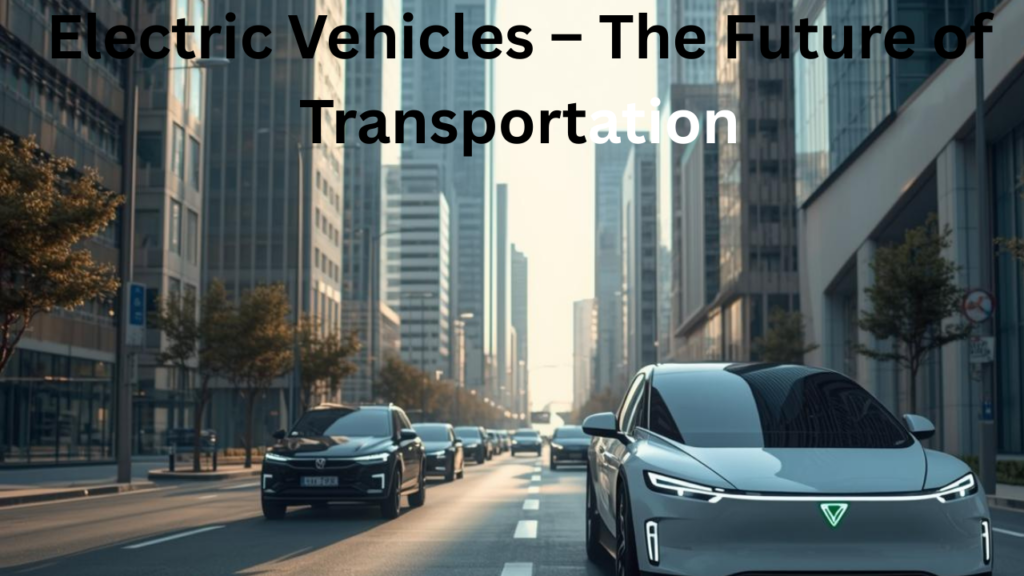
  • Electric Vehicles – The Future of Transportation

    The global transportation industry is undergoing a historic transformation. As concerns about climate change, air pollution, and fossil fuel dependency continue to rise, Electric Vehicles (EVs) are emerging as the most promising solution for sustainable mobility. Once considered a niche market, EVs are now becoming mainstream, with millions of vehicles on roads worldwide.

    Governments, automakers, and technology companies are investing billions into electric mobility. The shift toward EVs is not just about replacing gasoline engines—it represents a complete redesign of how transportation systems operate.

    In this article, we will explore how electric vehicles work, their advantages, challenges, global adoption trends, and what the future holds for this rapidly growing industry.


    What Are Electric Vehicles?

    Electric Vehicles (EVs) are automobiles powered by electric motors instead of internal combustion engines (ICE). Instead of using gasoline or diesel, EVs run on electricity stored in rechargeable batteries.

    There are three main types of electric vehicles:

    1. Battery Electric Vehicles (BEVs) – Fully electric, no fuel engine.
    2. Plug-in Hybrid Electric Vehicles (PHEVs) – Combine electric motor and fuel engine.
    3. Hybrid Electric Vehicles (HEVs) – Use both electricity and fuel but cannot be plugged in.

    Companies like Tesla and BYD are leading the global EV market with innovative designs and advanced battery technologies.


    How Electric Vehicles Work

    EVs operate using a battery pack that stores electrical energy. This energy powers an electric motor, which drives the wheels.

    Key components include:

    • Battery pack
    • Electric motor
    • Power inverter
    • Charging port
    • Controller system

    Unlike traditional engines, EVs have fewer moving parts, making them more efficient and requiring less maintenance.


    Environmental Benefits of EVs

    One of the biggest reasons for the rise of EVs is their environmental advantage.

    1. Zero Tailpipe Emissions

    EVs produce no direct emissions, reducing air pollution in cities.

    2. Reduced Greenhouse Gases

    When charged using renewable energy sources like solar or wind, EVs significantly lower carbon footprints.

    3. Energy Efficiency

    Electric motors convert more energy into motion compared to internal combustion engines.

    As countries push toward net-zero carbon goals, EV adoption is becoming a key strategy.


    Economic Advantages

    1. Lower Fuel Costs

    Electricity is generally cheaper than gasoline, reducing operating expenses.

    2. Reduced Maintenance

    EVs do not require oil changes or complex engine repairs.

    3. Government Incentives

    Many governments offer tax credits, rebates, and subsidies to encourage EV adoption.

    Over time, these cost benefits make EVs financially attractive to consumers.


    Charging Infrastructure Expansion

    A major factor influencing EV growth is charging infrastructure.

    There are three main types of chargers:

    • Level 1 (Home Charging) – Standard household outlet.
    • Level 2 (Public and Home Fast Charging) – Faster than Level 1.
    • DC Fast Charging – Rapid charging in minutes instead of hours.

    Companies and governments are rapidly expanding charging networks to eliminate “range anxiety,” the fear that a vehicle will run out of charge before reaching a station.


    Battery Technology Advancements

    Battery innovation is the heart of EV development. Modern EVs use lithium-ion batteries, but researchers are working on:

    • Solid-state batteries
    • Faster charging solutions
    • Longer battery lifespan
    • Improved energy density

    Companies like Tesla continue to invest heavily in battery research to increase driving range and reduce production costs.


    Autonomous and Smart Features

    Electric vehicles often integrate advanced technologies such as:

    • AI-powered driver assistance
    • Over-the-air software updates
    • Smart navigation systems
    • Regenerative braking

    EVs are becoming more like smart computers on wheels, combining clean energy with digital innovation.


    Global Adoption Trends

    EV adoption is accelerating worldwide.

    • Europe is implementing strict emission regulations.
    • China leads in EV production and sales.
    • The United States is expanding infrastructure investments.

    BYD has become one of the world’s largest EV manufacturers, especially dominating the Asian market.

    As battery prices fall and infrastructure improves, EV sales are expected to continue rising rapidly.


    Challenges Facing Electric Vehicles

    Despite strong growth, EVs still face challenges.

    1. Charging Infrastructure Gaps

    Rural and developing areas may lack sufficient charging stations.

    2. Battery Production Costs

    Although decreasing, batteries remain expensive.

    3. Raw Material Supply

    Lithium, cobalt, and nickel mining raises environmental and ethical concerns.

    4. Grid Capacity

    Increased EV adoption may put pressure on national power grids.

    Addressing these challenges will require global cooperation and innovation.


    The Role of Renewable Energy

    The true environmental potential of EVs depends on clean electricity sources.

    When EVs are charged using solar, wind, or hydro power, the overall carbon impact is significantly reduced. Some companies are integrating EV charging stations with renewable energy systems for maximum sustainability.


    The Future of Electric Mobility

    The future of transportation is likely to be electric, connected, and autonomous.

    We can expect:

    • Longer-range batteries
    • Ultra-fast charging
    • Smart charging networks
    • Vehicle-to-grid (V2G) technology
    • Fully autonomous electric fleets

    Electric buses, trucks, and even airplanes are already being developed.


    Will EVs Replace Gasoline Cars Completely?

    While internal combustion engines may not disappear immediately, many countries have announced plans to ban new gasoline car sales within the next decade or two.

    The shift will likely be gradual but inevitable as:

    • Technology improves
    • Costs decrease
    • Environmental policies strengthen
    • Consumer awareness grows

    Conclusion

    Electric Vehicles represent more than just a new type of car—they symbolize a global shift toward cleaner, smarter, and more sustainable transportation.

    Companies like Tesla and BYD are driving innovation and accelerating adoption worldwide.

    While challenges such as infrastructure and battery production remain, the long-term outlook for electric mobility is extremely promising.

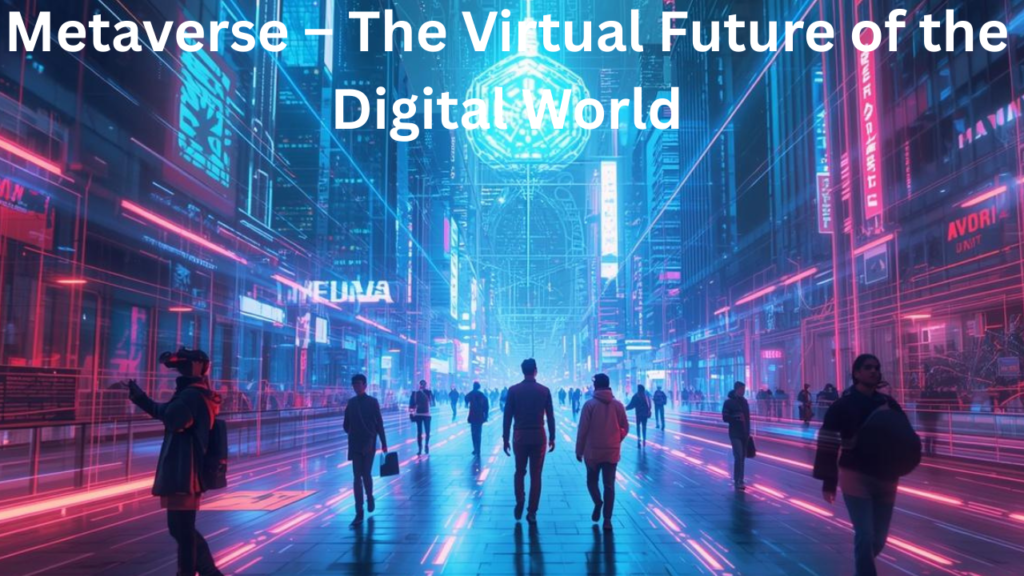
  • Metaverse – The Virtual Future of the Digital World

    The concept of the Metaverse has rapidly evolved from science fiction into a powerful technological vision that could redefine how humans interact, work, learn, and entertain themselves. In recent years, the idea of a fully immersive digital universe has gained serious attention from global tech giants, investors, and developers. The Metaverse represents more than just virtual reality—it is the next evolution of the internet.

    In this article, we will explore what the Metaverse is, how it works, the technologies behind it, its applications across industries, challenges it faces, and what the future may look like in a fully immersive digital world.


    What Is the Metaverse?

    The Metaverse is a shared, persistent, virtual space where users can interact with each other and digital environments in real time. It combines elements of:

    • Virtual Reality (VR)
    • Augmented Reality (AR)
    • Artificial Intelligence (AI)
    • Blockchain
    • 3D digital environments

    Unlike traditional internet browsing, the Metaverse allows users to “enter” digital spaces through avatars. Instead of viewing content on a screen, users experience immersive environments where they can socialize, work, shop, and play.

    Tech companies like Meta have invested billions of dollars to develop virtual platforms and hardware, while Microsoft focuses on integrating Metaverse solutions into business and enterprise systems.


    The Technologies Powering the Metaverse

    The Metaverse is built on multiple advanced technologies working together.

    1. Virtual Reality (VR)

    VR headsets create immersive 3D environments that simulate physical presence. Users can explore digital worlds and interact naturally using motion tracking.

    2. Augmented Reality (AR)

    AR overlays digital information onto the real world through devices like smart glasses or smartphones.

    3. Artificial Intelligence

    AI enhances realism by powering avatars, digital assistants, and automated systems inside virtual worlds.

    4. Blockchain and Digital Assets

    Blockchain technology enables secure digital ownership of virtual goods through cryptocurrencies and NFTs.

    5. High-Speed Connectivity

    Technologies like 5G ensure smooth and lag-free experiences in large shared virtual environments.


    Applications of the Metaverse

    1. Virtual Social Interaction

    The Metaverse allows people from different parts of the world to meet in immersive digital spaces. Instead of video calls, users can interact through avatars, attend virtual events, and explore digital landscapes together.

    Virtual concerts, conferences, and exhibitions are already becoming popular.


    2. Business and Remote Work

    Companies are exploring virtual offices where employees can collaborate in 3D workspaces. Microsoft has developed virtual meeting platforms that enhance remote collaboration using immersive technology.

    The Metaverse could reduce travel costs and create more interactive global workplaces.


    3. Education and Training

    Students can attend virtual classrooms, explore historical events in 3D simulations, or conduct science experiments in safe digital labs.

    Medical students, for example, can practice surgeries in realistic simulations without risk.


    4. Gaming and Entertainment

    Gaming is currently the most developed sector within the Metaverse. Players can:

    • Build digital worlds
    • Trade virtual assets
    • Participate in multiplayer environments
    • Attend live virtual events

    Immersive entertainment experiences are expected to grow rapidly.


    5. Digital Commerce

    The Metaverse introduces virtual marketplaces where users can buy:

    • Digital clothing for avatars
    • Virtual real estate
    • NFTs
    • Digital art

    Brands are exploring virtual stores where customers can browse and purchase products in 3D environments.


    Economic Opportunities in the Metaverse

    The Metaverse is expected to generate trillions of dollars in economic value over the next decade.

    New job roles may include:

    • Virtual architects
    • Avatar designers
    • Digital asset creators
    • Virtual event managers
    • Metaverse developers

    Companies like Meta are building hardware such as VR headsets and investing heavily in immersive digital platforms to lead this transformation.


    Challenges Facing the Metaverse

    Despite its enormous potential, the Metaverse faces several challenges.

    1. Privacy and Data Security

    Virtual environments collect large amounts of personal data, including behavior patterns and biometric information. Protecting user privacy will be critical.


    2. Digital Addiction

    Spending excessive time in immersive virtual worlds could impact mental health and real-world social interaction.


    3. High Costs

    VR devices and advanced hardware remain expensive, limiting accessibility for many users.


    4. Regulation and Governance

    Who controls the Metaverse? Governments and organizations must address questions related to digital property rights, taxation, and online safety.


    Is the Metaverse the Future of the Internet?

    Many experts believe the Metaverse represents Web 3.0—the next stage of internet evolution. Instead of browsing websites, users may navigate immersive digital worlds.

    However, the transition will likely be gradual. Traditional internet platforms and immersive environments will coexist for years.

    The success of the Metaverse depends on:

    • Technological advancements
    • User adoption
    • Regulatory clarity
    • Affordable hardware

    The Role of AI in the Metaverse

    Artificial Intelligence plays a crucial role in making the Metaverse dynamic and interactive. AI can:

    • Create realistic avatars
    • Translate languages in real time
    • Power intelligent NPCs (non-player characters)
    • Personalize user experiences

    Without AI, the Metaverse would feel static and limited.


    Future Possibilities

    In the coming years, the Metaverse could include:

    • Fully immersive digital cities
    • Virtual universities
    • Global business hubs
    • Advanced digital economies
    • Mixed reality environments blending physical and digital worlds

    Brain-computer interfaces may even allow users to interact with digital spaces using thoughts alone.


    Conclusion

    The Metaverse represents a bold vision of the future—one where digital and physical realities merge seamlessly. Companies like Meta and Microsoft are investing heavily to turn this vision into reality.

    While challenges related to privacy, regulation, and accessibility remain, the Metaverse has the potential to revolutionize communication, business, education, and entertainment.

    Whether it becomes the next version of the internet or evolves into something entirely new, one thing is certain: the Metaverse is shaping the future of digital interaction.

  • Cybersecurity Challenges in 2026 – Protecting the Digital World

    As the world becomes more digitally connected, cybersecurity has emerged as one of the most critical concerns of our time. In 2026, cyber threats are more sophisticated, more frequent, and more dangerous than ever before. From multinational corporations to individual smartphone users, no one is completely safe from cyber risks.

    With the rapid expansion of cloud computing, artificial intelligence, 5G networks, and the Internet of Things (IoT), the attack surface for cybercriminals has grown dramatically. In this article, we will explore the key cybersecurity challenges in 2026, the evolving threat landscape, emerging technologies in defense, and what the future holds for digital security.


    The Growing Importance of Cybersecurity

    Every day, billions of people rely on digital systems for communication, banking, healthcare, business operations, and entertainment. As digital dependency increases, so does vulnerability.

    Cybersecurity refers to the practice of protecting systems, networks, and data from cyberattacks. Leading security companies like Kaspersky and Norton continuously develop advanced tools to combat evolving threats.

    In 2026, cybersecurity is no longer optional—it is essential for survival in the digital economy.


    Major Cybersecurity Threats in 2026

    1. Ransomware Attacks

    Ransomware remains one of the biggest threats. Hackers encrypt critical data and demand payment to restore access. Hospitals, financial institutions, and government agencies are frequent targets.

    Ransomware attacks are becoming more targeted and organized, often involving large criminal networks.


    2. AI-Powered Cybercrime

    Artificial Intelligence has become a double-edged sword. While organizations use AI to defend against threats, cybercriminals also use AI to:

    • Automate attacks
    • Create realistic phishing emails
    • Develop deepfake scams
    • Crack passwords faster

    AI-driven attacks are harder to detect because they can adapt in real time.


    3. Cloud Security Risks

    As businesses move to cloud platforms, misconfigured settings and weak access controls expose sensitive data.

    Cloud-based attacks in 2026 include:

    • Data breaches
    • API vulnerabilities
    • Insider threats
    • Account hijacking

    Organizations must invest in strong encryption and identity management systems.


    4. IoT Vulnerabilities

    The rise of smart homes, wearable devices, and connected industrial systems has created millions of new entry points for hackers.

    Many IoT devices lack proper security updates, making them easy targets. A single compromised device can provide access to an entire network.


    5. Phishing and Social Engineering

    Phishing attacks remain highly effective. Cybercriminals trick users into sharing passwords or financial information through fake emails or websites.

    With AI-generated voice and video deepfakes, scams are becoming more convincing and harder to detect.


    The Impact of Cyberattacks

    Cyberattacks can have devastating consequences:

    • Financial losses
    • Reputation damage
    • Legal penalties
    • Operational shutdowns
    • Loss of customer trust

    In critical sectors like healthcare and energy, cyberattacks can even threaten human lives.


    Emerging Cybersecurity Solutions in 2026

    1. AI-Based Threat Detection

    AI-powered security systems analyze vast amounts of data in real time to detect unusual activity. These systems can respond automatically before damage occurs.

    Security firms like Kaspersky use machine learning algorithms to identify emerging malware patterns.


    2. Zero Trust Architecture

    The traditional “trust but verify” model is outdated. In 2026, many organizations adopt a Zero Trust model, where:

    • Every user must be verified
    • Every device must be authenticated
    • Access is strictly limited

    This approach minimizes the risk of insider threats and unauthorized access.


    3. Multi-Factor Authentication (MFA)

    Passwords alone are no longer secure. Multi-factor authentication adds additional layers of protection, such as:

    • Biometric verification
    • One-time codes
    • Security tokens

    Companies like Norton promote stronger identity protection solutions for individuals and businesses.


    4. Blockchain for Security

    Blockchain technology is increasingly used to secure transactions and verify digital identities. Its decentralized nature makes it resistant to tampering.


    Government Regulations and Cyber Laws

    Governments worldwide are strengthening cybersecurity laws to protect citizens and businesses. Regulations now require organizations to:

    • Report data breaches quickly
    • Protect user privacy
    • Implement strict security standards

    Non-compliance can result in heavy fines and legal action.

    International cooperation is also increasing, as cybercrime often crosses borders.


    Cybersecurity Skills Shortage

    One of the biggest challenges in 2026 is the global shortage of cybersecurity professionals. As threats grow more complex, the demand for skilled experts continues to rise.

    Organizations are investing in:

    • Cybersecurity training programs
    • Ethical hacking certifications
    • AI security research

    Building a skilled workforce is crucial for long-term digital protection.


    The Role of Individuals in Cybersecurity

    Cybersecurity is not just a corporate responsibility—it also depends on individual awareness.

    People should:

    • Use strong, unique passwords
    • Enable multi-factor authentication
    • Avoid clicking suspicious links
    • Keep software updated
    • Use trusted antivirus solutions

    Simple precautions can significantly reduce risk.


    The Future of Cybersecurity

    Looking ahead, cybersecurity will become even more advanced and automated. Future developments may include:

    • Fully AI-driven security operations centers
    • Quantum-resistant encryption
    • Biometric-based identity systems
    • Global cyber defense alliances

    As technology evolves, so will cyber threats. Continuous innovation and vigilance will be essential.


    Conclusion

    In 2026, cybersecurity stands at the frontline of the digital revolution. With the rise of AI, cloud computing, IoT, and global connectivity, the risks have never been greater.

    Organizations like Kaspersky and Norton continue to develop advanced solutions to defend against increasingly sophisticated threats.

    However, technology alone is not enough. Strong regulations, skilled professionals, and user awareness are equally important.

    The battle between cybercriminals and cybersecurity experts is ongoing. The future of the digital world depends on how well we protect it.

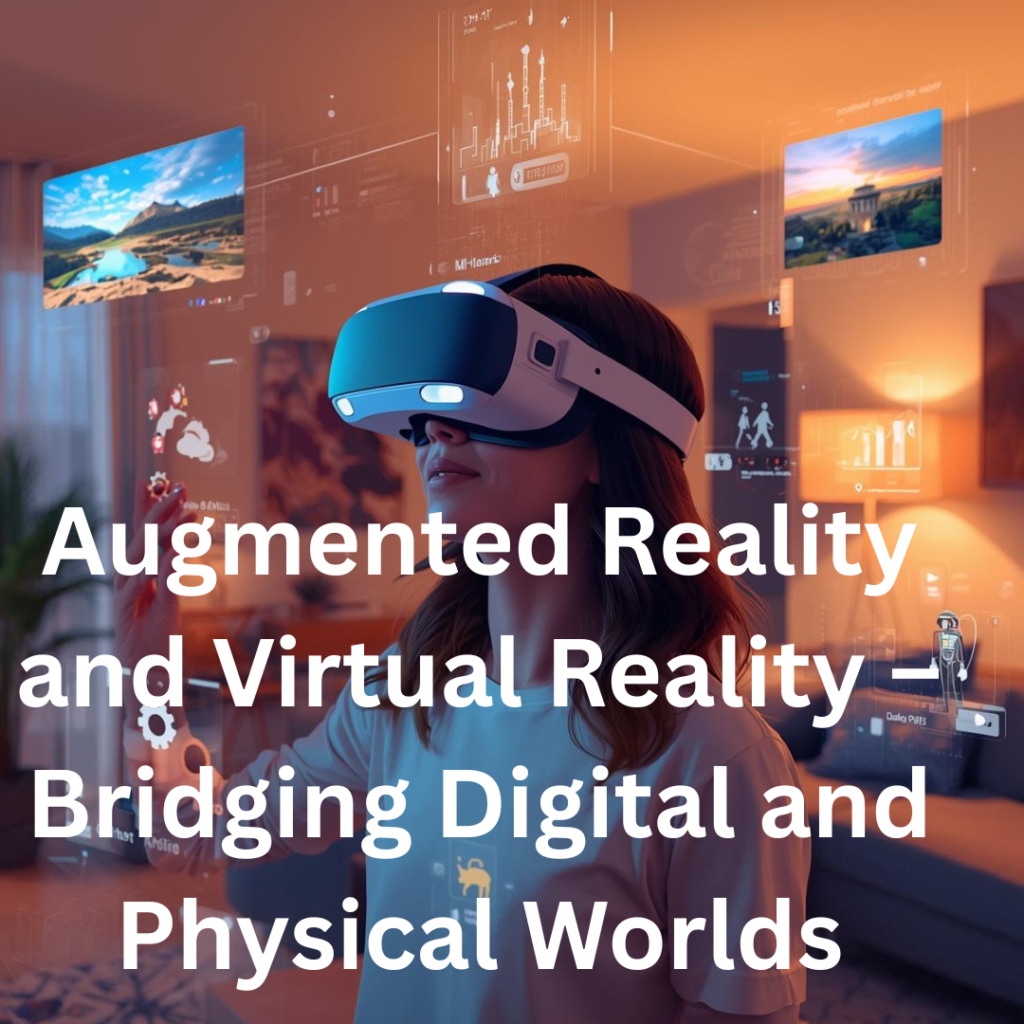
  • Augmented Reality and Virtual Reality – Bridging Digital and Physical Worlds

    In recent years, Augmented Reality (AR) and Virtual Reality (VR) have emerged as revolutionary technologies that are changing how we interact with digital content. While VR immerses users in entirely virtual environments, AR overlays digital elements onto the real world. Together, these technologies are transforming gaming, education, healthcare, retail, and even industrial operations.

    In this article, we will explore what AR and VR are, their differences, applications across industries, benefits, challenges, and the future of immersive technologies.


    Understanding Virtual Reality (VR)

    Virtual Reality is a technology that creates a fully immersive digital environment, allowing users to experience and interact with a computer-generated world. VR typically requires:

    • Headsets – Devices such as Oculus or HTC Vive.
    • Controllers and Sensors – Track hand movements and physical actions.
    • High-Performance Computers – Render realistic 3D environments.

    VR immerses users in a simulated reality, making them feel physically present within the digital world.


    Understanding Augmented Reality (AR)

    Augmented Reality overlays digital information onto the real world, enhancing perception and interaction. AR can be experienced through:

    • Smartphones and Tablets – Apps like Pokémon Go or IKEA Place.
    • AR Glasses – Devices that project information onto the user’s field of view.
    • Industrial AR Systems – Hands-free support for technicians and engineers.

    Unlike VR, AR does not replace reality but enhances it with digital elements.


    Key Differences Between AR and VR

    FeatureVirtual Reality (VR)Augmented Reality (AR)
    EnvironmentFully simulated digital worldReal world with digital overlays
    HardwareVR headsets, motion sensorsSmartphones, tablets, AR glasses
    ImmersionComplete immersionPartial immersion
    ApplicationsGaming, training, simulationsNavigation, industrial assistance, retail

    Applications of AR and VR

    1. Gaming and Entertainment

    VR provides fully immersive gaming experiences, allowing players to feel part of the action. AR enhances mobile games by blending digital content with real-world surroundings.

    2. Education and Training

    • VR classrooms allow students to explore historical events or scientific phenomena.
    • Medical training uses VR simulations for surgical practice.
    • AR overlays assist technical training in engineering, aviation, and machinery maintenance.

    Immersive learning improves engagement and retention.


    3. Healthcare

    AR and VR improve medical care:

    • VR helps patients manage pain and anxiety.
    • AR assists surgeons by projecting vital information during procedures.
    • VR simulations train medical professionals safely without risks.

    These technologies enhance both patient care and professional training.


    4. Retail and Marketing

    • AR apps allow customers to virtually try on clothes, makeup, or furniture.
    • VR can create virtual showrooms and immersive brand experiences.
    • Interactive AR campaigns engage consumers in new and innovative ways.

    These technologies enhance customer engagement and drive sales.


    5. Industrial and Manufacturing

    AR and VR support industrial operations:

    • VR simulates factory layouts and workflows for planning.
    • AR guides workers in complex assembly tasks, reducing errors.
    • Remote collaboration uses AR/VR to connect experts worldwide.

    This reduces operational costs and improves efficiency.


    6. Real Estate and Architecture

    • VR allows virtual property tours, saving time for buyers and agents.
    • AR overlays design plans onto real-world spaces, helping architects and clients visualize projects.

    Immersive visualization improves decision-making and client engagement.


    Benefits of AR and VR

    • Enhanced Learning and Training – Immersive simulations improve understanding.
    • Increased Engagement – Interactive experiences captivate users.
    • Improved Efficiency – AR assists in precise, real-time operations.
    • Cost Savings – VR training reduces the need for physical resources.
    • Innovation – Creates new opportunities in entertainment, marketing, and design.

    Challenges and Limitations

    While AR and VR have immense potential, they face several challenges:

    1. High Costs

    Quality VR headsets, AR glasses, and supporting hardware can be expensive.

    2. Health Concerns

    Prolonged VR use may cause motion sickness, eye strain, or disorientation.

    3. Technical Limitations

    High-resolution immersive experiences require powerful computing, high-speed internet, and advanced graphics.

    4. Content Creation

    Developing engaging AR/VR content is complex and resource-intensive.


    Future of AR and VR

    The future of AR and VR includes:

    • Mixed Reality (MR): Combining AR and VR for seamless interaction between real and digital worlds.
    • AI Integration: Smarter avatars, adaptive simulations, and personalized experiences.
    • Wearable AR Glasses: Lightweight, stylish devices for daily use.
    • Enterprise Applications: Virtual collaboration, remote support, and immersive analytics.
    • Expanded Gaming and Entertainment: Fully immersive metaverse experiences.

    These innovations will make AR and VR an integral part of both professional and personal life.


    Conclusion

    Augmented Reality and Virtual Reality are bridging the gap between the digital and physical worlds. Companies like Oculus are leading innovations that create immersive experiences for education, healthcare, entertainment, and industry.

    Despite challenges such as cost, health concerns, and technical limitations, the potential of AR and VR is enormous. These technologies are not just enhancing experiences—they are reshaping how we work, learn, interact, and perceive reality.