Category: Blog

Your blog category

  • Blockchain and Cryptocurrency – The Future of Digital Finance

    The world of finance is undergoing a massive transformation, and at the center of this revolution lies blockchain technology and cryptocurrency. Over the past decade, digital currencies have moved from being a niche experiment to becoming a global financial phenomenon. What once seemed like a risky digital trend is now influencing banking systems, investment strategies, and even government policies.

    Blockchain is not just about cryptocurrency—it is a groundbreaking technology that has the potential to redefine trust, transparency, and security in the digital age. In this article, we will explore what blockchain is, how cryptocurrency works, its benefits, risks, real-world applications, and what the future holds.


    What Is Blockchain Technology?

    Blockchain is a decentralized digital ledger that records transactions across multiple computers. Instead of storing data in one central location (like traditional banks), blockchain distributes information across a network of nodes.

    Key features of blockchain include:

    • Decentralization – No central authority controls it.
    • Transparency – Transactions are visible to all participants.
    • Security – Data is encrypted and extremely difficult to alter.
    • Immutability – Once recorded, transactions cannot be changed.

    Every transaction is stored in a “block,” and these blocks are linked together in a “chain,” forming a secure and continuous record.


    Understanding Cryptocurrency

    Cryptocurrency is a digital or virtual currency that uses cryptography for security and operates on blockchain technology.

    The first and most well-known cryptocurrency is Bitcoin, launched in 2009. It introduced the concept of decentralized digital money that does not rely on banks or governments.

    Another major platform is Ethereum, which expanded blockchain functionality by enabling smart contracts—self-executing agreements written in code.

    Since then, thousands of cryptocurrencies have been created, each serving different purposes.


    How Cryptocurrency Works

    Cryptocurrencies operate on peer-to-peer networks. When someone sends digital currency:

    1. The transaction is broadcast to the network.
    2. Network participants (miners or validators) verify it.
    3. The transaction is added to a block.
    4. The block is added to the blockchain.

    This process ensures security and eliminates the need for intermediaries like banks.

    Users store their digital assets in crypto wallets, which contain private keys that allow access to funds.


    Benefits of Blockchain and Cryptocurrency

    1. Financial Freedom

    Cryptocurrency allows users to send and receive money globally without relying on traditional banks. This is especially important in regions with limited banking infrastructure.

    2. Lower Transaction Costs

    Cross-border payments through banks can be expensive and slow. Blockchain transactions are often faster and cheaper.

    3. Transparency and Trust

    Since blockchain records are publicly accessible, it reduces fraud and increases accountability.

    4. Smart Contracts

    Platforms like Ethereum allow developers to create decentralized applications (DApps) and automate agreements without intermediaries.


    Blockchain Beyond Cryptocurrency

    Blockchain technology has applications far beyond digital money.

    1. Supply Chain Management

    Companies use blockchain to track goods from production to delivery, ensuring authenticity and reducing fraud.

    2. Healthcare

    Patient records can be stored securely and shared safely between hospitals.

    3. Voting Systems

    Blockchain-based voting systems could improve election transparency and reduce manipulation.

    4. Real Estate

    Property ownership records can be digitized and secured through blockchain.


    The Rise of Decentralized Finance (DeFi)

    Decentralized Finance (DeFi) is one of the fastest-growing sectors in crypto. It uses blockchain to recreate traditional financial services like:

    • Lending
    • Borrowing
    • Trading
    • Insurance

    But without banks or centralized institutions.

    Users can earn interest, take loans, and trade assets through decentralized platforms powered by smart contracts.


    NFTs and Digital Ownership

    Non-Fungible Tokens (NFTs) are unique digital assets stored on blockchain networks. They represent ownership of digital items such as:

    • Artwork
    • Music
    • Virtual land
    • Collectibles

    NFTs have transformed the digital art and gaming industries by giving creators direct control over their work.


    Challenges and Risks

    Despite its revolutionary potential, blockchain and cryptocurrency face significant challenges.

    1. Volatility

    Cryptocurrency prices can fluctuate dramatically. For example, Bitcoin has experienced major price swings over the years.

    2. Regulation Uncertainty

    Governments worldwide are still developing laws and regulations for cryptocurrency markets.

    3. Security Threats

    While blockchain itself is secure, crypto exchanges and wallets can be hacked.

    4. Environmental Concerns

    Some cryptocurrencies require large amounts of energy for mining, raising environmental issues.


    Government and Institutional Adoption

    In recent years, governments and financial institutions have shown growing interest in blockchain technology.

    Some countries are exploring:

    • Central Bank Digital Currencies (CBDCs)
    • Blockchain-based payment systems
    • Regulatory frameworks for crypto markets

    Major corporations are also investing in blockchain innovation and digital assets.


    The Future of Cryptocurrency

    The future of blockchain and cryptocurrency may include:

    • Widespread digital payments
    • Integration with traditional banking
    • Tokenized assets (stocks, real estate, commodities)
    • Global decentralized financial systems

    Blockchain could become a core infrastructure technology, similar to how the internet transformed communication.

    Platforms like Ethereum continue upgrading to improve scalability and reduce energy consumption, making the technology more sustainable and efficient.


    Will Cryptocurrency Replace Traditional Banks?

    While cryptocurrencies may not completely replace banks, they are likely to reshape the financial landscape.

    Traditional institutions may adopt blockchain technology to improve transparency and efficiency. The future may involve a hybrid system where decentralized and centralized finance coexist.


    Conclusion

    Blockchain and cryptocurrency represent one of the most disruptive innovations of the digital era. From the launch of Bitcoin to the smart contract revolu
  • 5G Technology and Its Impact – The Next Digital Revolution

    The world is entering a new era of connectivity with the rise of 5G technology. After 2G enabled voice calls, 3G introduced mobile internet, and 4G revolutionized streaming and social media, 5G is set to transform entire industries. It promises ultra-fast speeds, extremely low latency, and the ability to connect billions of devices simultaneously.

    5G is not just an upgrade in network speed—it is the foundation for future technologies such as smart cities, autonomous vehicles, advanced robotics, and the Internet of Things (IoT). In this article, we will explore what 5G is, how it works, its benefits, challenges, and its long-term global impact.


    What Is 5G Technology?

    5G stands for the fifth generation of wireless communication technology. It is designed to provide:

    • Speeds up to 100 times faster than 4G
    • Ultra-low latency (near real-time communication)
    • Massive device connectivity
    • Greater network reliability

    Telecommunications and semiconductor companies like Qualcomm and Huawei play a major role in developing 5G infrastructure, chipsets, and network equipment.


    How 5G Works

    5G operates on three main spectrum bands:

    1. Low-band spectrum – Provides wide coverage but moderate speeds.
    2. Mid-band spectrum – Offers a balance between speed and coverage.
    3. High-band spectrum (mmWave) – Delivers extremely high speeds but with shorter range.

    Unlike previous generations, 5G uses advanced technologies such as:

    • Massive MIMO (Multiple Input Multiple Output)
    • Beamforming
    • Small cell networks
    • Network slicing

    These innovations allow 5G networks to handle high data traffic efficiently and connect millions of devices within a small area.


    Speed and Performance Improvements

    One of the most noticeable benefits of 5G is speed. Users can download large files, stream ultra-HD videos, and play online games with almost no lag.

    For example:

    • 4K and even 8K video streaming becomes seamless.
    • Cloud gaming becomes smoother and more responsive.
    • Video conferencing experiences minimal delay.

    This level of performance opens doors to real-time applications that were previously impossible.


    5G and the Internet of Things (IoT)

    5G is the backbone of the Internet of Things. It can connect billions of devices—from smart home appliances to industrial sensors—without network congestion.

    With 5G:

    • Smart homes become more responsive.
    • Wearable health devices transmit data instantly.
    • Factories operate with automated machines connected in real time.

    This large-scale connectivity supports the growth of smart ecosystems.


    Smart Cities and Infrastructure

    5G is expected to power the development of smart cities. These cities will use connected sensors and AI systems to improve:

    • Traffic management
    • Energy efficiency
    • Waste management
    • Public safety

    Real-time communication between devices allows faster decision-making and better urban planning. Traffic signals can adjust automatically, emergency services can respond more quickly, and energy systems can optimize power usage.


    Autonomous Vehicles and Transportation

    Autonomous vehicles require instant communication between cars, traffic systems, and cloud servers. Even a slight delay can cause accidents.

    With ultra-low latency, 5G enables:

    • Vehicle-to-vehicle communication
    • Real-time navigation updates
    • Enhanced road safety systems

    Companies developing self-driving technology rely heavily on 5G networks for safe and efficient operation.


    5G in Healthcare

    5G has the potential to transform healthcare in revolutionary ways.

    Possible applications include:

    • Remote surgeries using robotic systems
    • Real-time patient monitoring
    • Faster medical data transfer
    • Telemedicine in rural areas

    Doctors could perform procedures remotely with near-zero delay, expanding access to specialized healthcare worldwide.


    Impact on Business and Industry

    5G supports Industry 4.0—the era of smart manufacturing and automation.

    Industries can benefit from:

    • Smart factories with connected robots
    • Real-time supply chain tracking
    • Enhanced logistics systems
    • Automated quality control

    With reliable and fast connectivity, businesses can improve productivity and reduce operational costs.


    Economic Growth and Job Creation

    5G is expected to contribute trillions of dollars to the global economy over the next decade. It will create new opportunities in:

    • Telecommunications
    • App development
    • Cloud computing
    • Cybersecurity
    • Data analytics

    While some traditional roles may evolve or disappear, new technology-driven jobs will emerge.


    Challenges and Concerns

    Despite its benefits, 5G also faces challenges.

    1. Infrastructure Costs

    Building 5G networks requires massive investment in towers, fiber optics, and equipment.

    2. Security Risks

    As more devices connect to the network, the risk of cyberattacks increases.

    3. Regulatory Issues

    Governments must manage spectrum allocation and ensure fair competition.

    4. Health Concerns

    Although scientific studies have not confirmed harmful effects, public concerns about radiation continue to circulate.

    Addressing these issues is essential for the smooth global rollout of 5G.


    Global Competition in 5G Development

    5G has become a strategic priority for many nations. Countries are racing to lead in 5G innovation because it influences economic power and technological dominance.

    Technology providers, governments, and telecom operators worldwide are investing heavily to expand coverage and enhance performance.


    The Future Beyond 5G

    While 5G is still expanding globally, researchers are already exploring 6G technology. The future may include:

    • Holographic communication
    • Fully immersive virtual reality
    • AI-powered network management
    • Ultra-smart cities

    5G is not the final destination—it is the bridge to even more advanced digital ecosystems.


    Conclusion

    5G technology represents a transformative leap in global connectivity. With faster speeds, lower latency, and the ability to connect billions of devices, it is set to revolutionize industries, healthcare, transportation, and everyday life.

  • The Future of Artificial Intelligence – A New Global Revolution

    Artificial Intelligence (AI) is no longer a futuristic concept found only in science fiction. It has become one of the most powerful and transformative technologies of the 21st century. From smartphones and smart homes to healthcare and finance, AI is reshaping how we live, work, and interact. As research accelerates and investments grow, the future of AI promises even deeper integration into every aspect of human life.

    In this comprehensive article, we will explore what AI is, how it has evolved, its applications across industries, the opportunities it presents, the challenges it raises, and what the future may hold.


    What Is Artificial Intelligence?

    Artificial Intelligence refers to computer systems designed to simulate human intelligence. These systems can learn from data, recognize patterns, make decisions, understand language, and even generate creative content.

    AI is powered by technologies such as:

    • Machine Learning (ML)
    • Deep Learning
    • Natural Language Processing (NLP)
    • Computer Vision
    • Robotics

    Organizations like OpenAI have developed advanced AI models capable of understanding and generating human-like text, while Google integrates AI into search engines, cloud computing, and autonomous systems.


    The Rapid Evolution of AI

    AI research began decades ago, but recent advancements in computing power, big data, and neural networks have accelerated its development dramatically.

    In the early days, AI systems could only perform rule-based tasks. Today, AI models can:

    • Translate languages instantly
    • Diagnose diseases
    • Drive vehicles
    • Create art and music
    • Write code
    • Analyze massive datasets in seconds

    The shift from narrow AI (designed for specific tasks) toward more generalized AI systems marks a critical turning point. The next phase may involve Artificial General Intelligence (AGI), where machines could perform any intellectual task that a human can.


    AI in Healthcare: Saving Lives

    One of the most promising areas for AI is healthcare. AI systems can analyze medical images, detect diseases early, and recommend personalized treatment plans.

    For example:

    • AI can detect cancer in radiology scans with high accuracy.
    • Predictive algorithms help identify patients at risk.
    • AI-driven drug discovery speeds up research.

    Companies such as IBM have developed AI systems to support medical decision-making, while research institutions collaborate with AI labs to transform diagnostics and treatment.

    In the future, AI could enable fully personalized medicine, where treatments are tailored based on a person’s genetic profile.


    AI in Business and Finance

    Businesses worldwide are using AI to improve efficiency, reduce costs, and increase profits.

    In finance, AI helps with:

    • Fraud detection
    • Risk assessment
    • Automated trading
    • Credit scoring

    Fintech leaders like PayPal use AI algorithms to monitor transactions and prevent fraud in real time.

    Customer service has also evolved with AI-powered chatbots that provide 24/7 support, enhancing user experience and reducing operational expenses.

    In the future, AI-driven decision-making systems may become central to corporate strategy.


    AI in Education: Personalized Learning

    AI is revolutionizing education by making learning more personalized and accessible.

    AI-powered platforms can:

    • Adapt lessons to student performance
    • Provide instant feedback
    • Automate grading
    • Offer virtual tutoring

    This personalized approach ensures students learn at their own pace. In developing regions, AI could provide quality education where human teachers are limited.

    The future may include AI mentors that guide students throughout their educational journey.


    Autonomous Vehicles and Smart Transportation

    Self-driving cars represent one of the most visible AI applications. Companies like Tesla and Waymo are developing autonomous driving systems powered by AI.

    These vehicles use:

    • Computer vision
    • Real-time data processing
    • Sensor fusion
    • Machine learning algorithms

    AI-driven transportation could reduce accidents, optimize traffic, and lower emissions. In the future, smart cities may rely entirely on AI-managed transport systems.


    AI in Cybersecurity

    As digital threats increase, AI is becoming essential in cybersecurity.

    AI systems can:

    • Detect unusual activity
    • Identify malware patterns
    • Respond to threats instantly
    • Predict potential vulnerabilities

    Cybersecurity firms leverage AI to protect businesses and individuals from sophisticated cyberattacks. In the coming years, AI will likely become the backbone of digital defense systems.


    AI and Creativity

    AI is no longer limited to analytical tasks. It is now capable of creative output, including:

    • Writing articles
    • Composing music
    • Generating artwork
    • Designing products

    Generative AI models can create highly realistic images and text. This has transformed industries such as marketing, entertainment, and content creation.

    However, this also raises questions about originality, authorship, and intellectual property.


    Economic Impact of AI

    AI is expected to contribute trillions of dollars to the global economy in the coming decades. It can:

    • Increase productivity
    • Automate repetitive tasks
    • Create new industries
    • Enhance innovation

    While AI will create new jobs in tech and data science, it may also replace certain manual and repetitive roles. This shift requires reskilling and upskilling of the workforce.

    Governments and corporations must invest in education and training to prepare for an AI-driven economy.


    Ethical Challenges and Risks

    Despite its enormous potential, AI poses significant ethical and societal challenges.

    1. Job Displacement

    Automation may reduce demand for certain jobs, leading to unemployment in some sectors.

    2. Bias and Fairness

    AI systems can inherit biases from the data they are trained on, resulting in unfair outcomes.

    3. Privacy Concerns

    AI relies heavily on data collection, raising concerns about surveillance and personal privacy.

    4. AI Misuse

    AI technologies could be misused for deepfakes, cyber warfare, or misinformation.

    Organizations like OpenAI emphasize responsible AI development, focusing on safety and ethical standards.


    AI Governance and Regulation

    As AI becomes more powerful, governments worldwide are developing regulatory frameworks to ensure responsible use.

    Policies aim to address:

    • Transparency
    • Accountability
    • Data protection
    • AI safety standards

    International cooperation will be essential to manage AI’s global impact.


    The Future: What Lies Ahead?

    The future of AI may include:

    • Artificial General Intelligence (AGI)
    • Human-AI collaboration
    • AI-powered smart cities
    • Fully autonomous industries
    • Brain-computer interfaces

    Tech giants like Google continue investing heavily in AI research, while startups innovate rapidly in specialized AI solutions.

    In the long term, AI could become an invisible yet essential layer of society—powering everything from infrastructure to personal assistants.


    Human and AI Collaboration

    Rather than replacing humans, AI is more likely to enhance human capabilities.

    Doctors supported by AI can diagnose faster.
    Writers can generate ideas more efficiently.
    Engineers can simulate complex systems instantly.

    The future belongs to those who learn to work alongside AI.


    Conclusion

    Artificial Intelligence represents one of the most significant technological revolutions in human history. Its applications span healthcare, finance, education, transportation, cybersecurity, and beyond. With organizations like OpenAI and Google leading innovation, AI is advancing at an unprecedented pace.

    However, with great power comes great responsibility. Ethical development, thoughtful regulation, and global cooperation are crucial to ensuring AI benefits humanity as a whole.

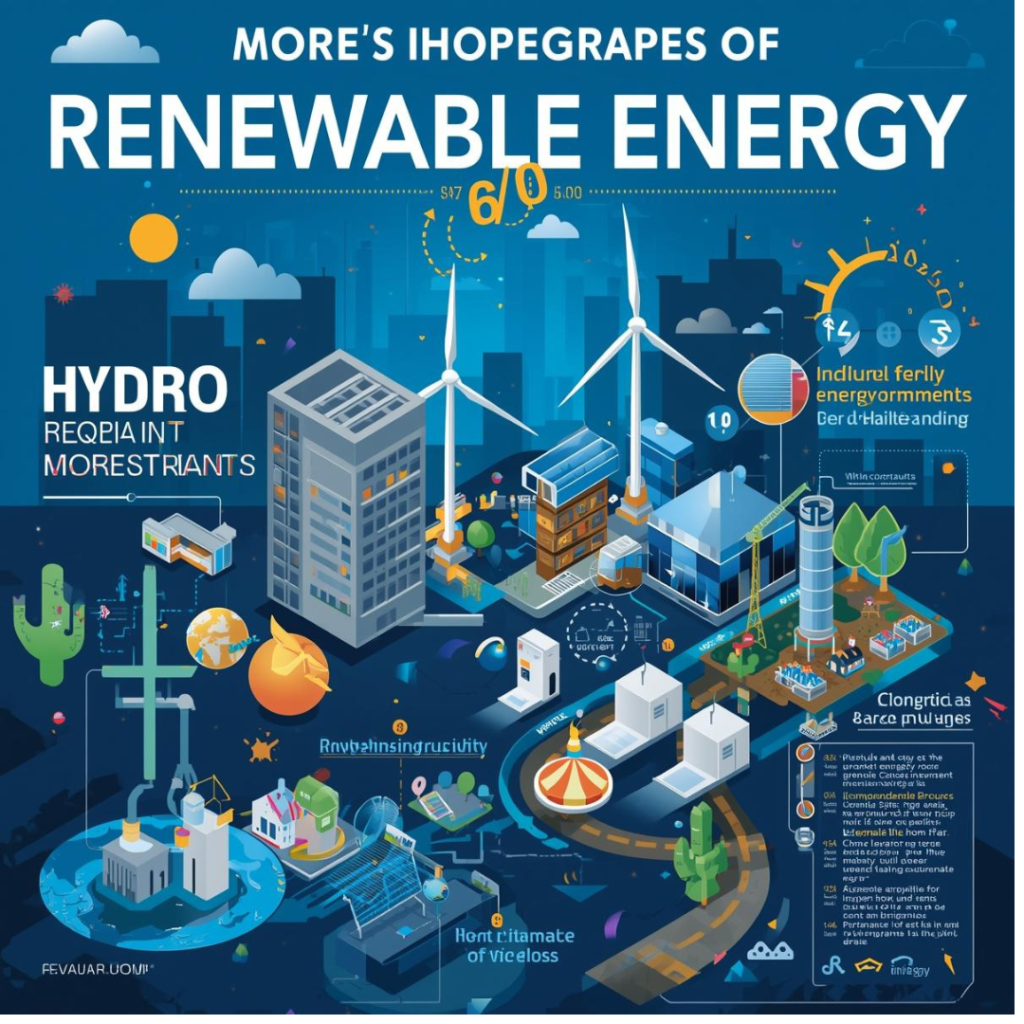
  • Renewable Energy – Powering a Sustainable Future

    As the world grapples with climate change, environmental degradation, and the depletion of fossil fuels, renewable energy has emerged as a critical solution for a sustainable future. Renewable energy harnesses natural resources that are replenished constantly, such as sunlight, wind, water, and geothermal heat, to generate electricity and power industries, homes, and transportation.

    In this article, we will explore the types of renewable energy, their applications, benefits, challenges, and how they are shaping the future of global energy.


    What Is Renewable Energy?

    Renewable energy refers to energy derived from natural sources that are naturally replenished and virtually inexhaustible. Unlike fossil fuels, which emit greenhouse gases and contribute to climate change, renewable energy provides cleaner, more sustainable alternatives.

    Major types include:

    • Solar energy – Harnessing sunlight through photovoltaic (PV) panels or solar thermal systems.
    • Wind energy – Converting wind flow into electricity using turbines.
    • Hydropower – Generating power from flowing or falling water.
    • Geothermal energy – Utilizing heat from the Earth’s core.
    • Biomass energy – Producing energy from organic materials like wood, crop waste, or algae.

    Companies like NextEra Energy and Vestas are leading the global renewable energy sector.


    Solar Energy

    How It Works

    Solar panels convert sunlight into electricity using photovoltaic cells. Concentrated solar power (CSP) systems use mirrors to focus sunlight to produce heat, which generates electricity.

    Applications

    • Residential rooftops
    • Commercial buildings
    • Utility-scale solar farms
    • Solar-powered devices and vehicles

    Benefits

    • Abundant and renewable source
    • Reduces electricity bills and carbon footprint
    • Low maintenance and scalable

    Solar energy has become one of the fastest-growing sources of electricity worldwide.


    Wind Energy

    How It Works

    Wind turbines convert kinetic energy from the wind into mechanical energy, which is then transformed into electricity. Modern turbines are designed for maximum efficiency and minimal environmental impact.

    Applications

    • Large-scale wind farms onshore and offshore
    • Distributed small wind systems for homes or communities

    Benefits

    • Clean, renewable, and cost-effective
    • Generates electricity without emissions
    • Can complement other renewable sources

    Countries with strong wind resources, like Denmark and the United States, are investing heavily in wind power.


    Hydropower

    How It Works

    Hydropower uses flowing or falling water to spin turbines connected to generators, producing electricity. Large dams, rivers, and small-scale hydro systems all contribute to energy generation.

    Applications

    • Utility-scale dams
    • Run-of-river systems for local communities
    • Pumped storage for energy management

    Benefits

    • Reliable and consistent energy source
    • Supports water management and irrigation
    • Can provide grid stability

    Hydropower remains one of the largest renewable energy contributors globally.


    Geothermal Energy

    How It Works

    Geothermal energy taps heat from beneath the Earth’s surface to generate electricity or provide heating. This energy is highly sustainable and available year-round.

    Applications

    • Geothermal power plants
    • District heating systems
    • Direct heating for industrial and residential use

    Benefits

    • Low carbon emissions
    • Reliable and continuous power supply
    • Minimal land footprint

    Iceland and the Philippines are global leaders in geothermal energy utilization.


    Biomass Energy

    How It Works

    Biomass energy is derived from organic materials, including agricultural waste, wood, and algae. The biomass is burned or converted into biofuels to generate electricity or heat.

    Applications

    • Bioelectricity plants
    • Biofuel production for transportation
    • Combined heat and power (CHP) systems

    Benefits

    • Reduces waste and supports circular economy
    • Renewable and widely available
    • Can reduce dependence on fossil fuels

    Biomass offers flexibility and complements other renewable energy sources.


    Benefits of Renewable Energy

    • Environmental Sustainability: Reduces greenhouse gas emissions and pollution.
    • Energy Security: Diversifies energy supply and reduces dependence on fossil fuels.
    • Economic Growth: Creates jobs in manufacturing, installation, and maintenance.
    • Cost Savings: Long-term electricity cost reduction due to low operating expenses.
    • Innovation: Encourages development of new technologies like energy storage and smart grids.

    Challenges and Limitations

    Despite its benefits, renewable energy faces several challenges:

    1. Intermittency

    Solar and wind depend on weather and time of day, requiring storage or backup systems for consistent power.

    2. High Initial Costs

    Installation of renewable energy systems requires significant upfront investment.

    3. Land and Environmental Impact

    Large solar farms, wind turbines, and hydropower projects can affect ecosystems and local communities.

    4. Energy Storage

    Efficient storage solutions like batteries are needed to balance supply and demand.


    The Role of Technology

    Technological advancements are accelerating renewable energy adoption:

    • Energy Storage Systems: Batteries store excess power for later use.
    • Smart Grids: Manage energy distribution efficiently across networks.
    • AI and IoT: Optimize generation, consumption, and maintenance.
    • Hybrid Systems: Combine multiple renewable sources for reliability.

    Companies like NextEra Energy are investing in advanced energy storage and grid integration solutions.


    The Future of Renewable Energy

    The transition to renewable energy is critical for a sustainable future. Trends include:

    • Global shift toward net-zero carbon targets
    • Expansion of offshore wind and solar projects
    • Development of green hydrogen as an energy carrier
    • Integration with electric vehicles and smart cities
    • Advances in energy storage and efficiency

    Renewable energy is set to become the backbone of global energy systems.


    Conclusion

    Renewable energy is not just a technological advancement—it is a global imperative. By harnessing resources like solar, wind, hydro, geothermal, and biomass, humanity can reduce reliance on fossil fuels, mitigate climate change, and create a sustainable, prosperous future.

    Companies like NextEra Energy and Vestas are driving this transformation, demonstrating the potential of clean energy at scale.

    While challenges such as intermittency, costs, and environmental impact exist, the long-term benefits of renewable energy far outweigh the limitations. The future is clean, sustainable, and powered by nature’s own resources.

  • Artificial Intelligence and Machine Learning – Transforming Every Industry

    Artificial Intelligence (AI) and Machine Learning (ML) are at the forefront of the technological revolution, reshaping how businesses operate, governments deliver services, and individuals interact with technology. From voice assistants to autonomous vehicles, AI and ML are transforming industries by enabling machines to learn, reason, and make decisions like humans.

    In this article, we will explore what AI and ML are, their real-world applications, benefits, challenges, and the future of intelligent systems.


    What Is Artificial Intelligence?

    Artificial Intelligence is the simulation of human intelligence in machines that are programmed to think, reason, and learn. AI systems can perform tasks such as:

    • Problem-solving
    • Speech recognition
    • Visual perception
    • Decision-making

    Machine Learning, a subset of AI, allows computers to improve performance through experience, learning patterns from data without being explicitly programmed.

    Leading companies like Google and OpenAI are driving breakthroughs in AI and ML, powering applications from natural language processing to autonomous robotics.


    How Machine Learning Works

    Machine Learning involves training algorithms on large datasets to identify patterns and make predictions. The process typically includes:

    1. Data Collection – Gathering large amounts of structured or unstructured data.
    2. Data Preprocessing – Cleaning and organizing data for analysis.
    3. Model Training – Using algorithms to learn patterns from data.
    4. Evaluation – Testing the model’s accuracy and refining it.
    5. Deployment – Implementing the trained model for real-world applications.

    There are three main types of ML:

    • Supervised Learning – Learning from labeled datasets.
    • Unsupervised Learning – Identifying patterns in unlabeled data.
    • Reinforcement Learning – Learning through trial and error to maximize rewards.

    Applications of AI and ML

    1. Healthcare

    AI and ML are revolutionizing healthcare:

    • Predictive diagnostics – Detecting diseases like cancer early.
    • Medical imaging analysis – Enhancing accuracy in radiology.
    • Drug discovery – Accelerating research using simulations and pattern recognition.
    • Virtual health assistants – Providing patient guidance and monitoring.

    AI improves patient outcomes, reduces costs, and optimizes healthcare delivery.


    2. Finance

    AI and ML have transformed banking and finance:

    • Fraud detection through anomaly detection algorithms.
    • Algorithmic trading for faster, data-driven investment decisions.
    • Personalized financial recommendations for customers.
    • Risk assessment and credit scoring.

    Financial institutions leverage AI to improve efficiency and enhance security.


    3. Retail and E-Commerce

    AI enhances customer experience and operations:

    • Personalized recommendations using predictive analytics.
    • Inventory management through demand forecasting.
    • Chatbots for customer support.
    • Automated checkout systems.

    Retailers are using AI to increase sales, reduce costs, and improve satisfaction.


    4. Autonomous Vehicles

    Self-driving cars rely on AI and ML to:

    • Interpret sensor data and identify objects.
    • Navigate traffic and optimize routes.
    • Make real-time decisions for safety.

    Companies like Tesla are leading the development of AI-driven autonomous vehicles.


    5. Smart Cities and IoT

    AI powers intelligent infrastructure:

    • Traffic optimization to reduce congestion.
    • Energy management in smart grids.
    • Public safety monitoring and predictive policing.
    • Environmental monitoring and disaster prediction.

    Integration with IoT creates responsive and adaptive urban environments.


    Benefits of AI and ML

    • Efficiency: Automates repetitive tasks and speeds up processes.
    • Accuracy: Reduces human error in complex decision-making.
    • Cost Savings: Optimizes resource allocation and reduces operational expenses.
    • Innovation: Enables new products, services, and business models.
    • Personalization: Provides tailored experiences for users across industries.

    AI and ML are enabling companies to become more data-driven, adaptive, and competitive.


    Challenges and Concerns

    While AI offers tremendous benefits, it also presents challenges:

    1. Data Privacy

    AI relies on large datasets, which may include sensitive personal information. Misuse or breaches can compromise privacy.

    2. Bias and Fairness

    Algorithms can inherit biases present in the training data, leading to unfair outcomes.

    3. Job Displacement

    Automation powered by AI may replace certain jobs, particularly repetitive or routine roles.

    4. Security Risks

    AI systems can be vulnerable to adversarial attacks or manipulation.

    5. Explainability

    Complex AI models are often “black boxes,” making it difficult to understand their decision-making processes.


    The Role of AI in Future Technology

    AI and ML will continue to power advancements in:

    • Robotics – Enabling intelligent, adaptive machines.
    • Healthcare – Personalized medicine and predictive care.
    • Autonomous Transportation – Self-driving cars and drones.
    • Natural Language Processing – Real-time translation, virtual assistants, and chatbots.
    • Cybersecurity – Detecting threats and automating defenses.

    The combination of AI, ML, IoT, and 5G networks will create highly connected and intelligent ecosystems.


    Ethical and Social Considerations

    AI development must address ethical questions:

    • How to ensure fairness and prevent bias?
    • Who is responsible for AI decisions?
    • How to protect privacy and data security?
    • How to balance automation with employment needs?

    Governments, organizations, and AI researchers are working to create regulations and guidelines for responsible AI use.


    Conclusion

    Artificial Intelligence and Machine Learning are transforming industries and redefining how humans interact with technology. Companies like Google and OpenAI are leading innovations that power smarter healthcare, finance, transportation, and urban infrastructure.

    Despite challenges such as bias, privacy concerns, and job displacement, the potential of AI and ML is enormous. As these technologies continue to evolve, they will increasingly shape a world that is more efficient, intelligent, and responsive, driving progress across every sector of society.

  • Biotechnology – Redefining Medicine and Agriculture

    Biotechnology is one of the most transformative fields of the 21st century, combining biology, technology, and engineering to improve human health, agriculture, and the environment. By manipulating biological systems at the molecular and cellular level, scientists are creating innovative solutions to some of the world’s most pressing challenges.

    In this article, we will explore what biotechnology is, its applications in medicine and agriculture, recent breakthroughs, ethical considerations, and its future potential.


    What Is Biotechnology?

    Biotechnology involves the use of living organisms, cells, or biological systems to develop products and technologies that benefit humanity. It spans a wide range of disciplines, including:

    • Genetics and genomics
    • Molecular biology
    • Bioinformatics
    • Synthetic biology

    Companies like Moderna and CRISPR Therapeutics are leading the development of vaccines, gene therapies, and innovative biotechnological solutions.


    Applications in Medicine

    Biotechnology has revolutionized healthcare in several ways:

    1. Drug Development and Vaccines

    • Biotechnology accelerates drug discovery by analyzing biological targets at the molecular level.
    • mRNA vaccines, such as those developed by Moderna, have demonstrated rapid and effective responses to pandemics.
    • Personalized medicine tailors treatments to individual genetic profiles, increasing effectiveness and reducing side effects.

    2. Gene Editing

    CRISPR technology allows precise modification of DNA to correct genetic disorders. Applications include:

    • Treatment of inherited diseases such as sickle cell anemia.
    • Potential therapies for cancer and rare disorders.
    • Experimental approaches to enhance disease resistance.

    Companies like CRISPR Therapeutics are pioneering these advances, opening new horizons in healthcare.


    3. Regenerative Medicine

    Stem cell research and tissue engineering enable the regeneration or replacement of damaged tissues and organs. Applications include:

    • Treating burns, heart disease, and spinal injuries.
    • Creating lab-grown organs for transplantation.

    Biotechnology is making previously incurable conditions manageable or treatable.


    4. Diagnostics and Personalized Care

    Biotechnology improves diagnostics through:

    • Advanced genetic testing
    • Biomarker identification
    • Rapid disease detection

    This allows doctors to provide personalized care and preventive strategies.


    Applications in Agriculture

    Biotechnology is also transforming agriculture, ensuring food security and sustainability:

    1. Genetically Modified Crops

    • Crops engineered for drought resistance, pest resistance, or higher yield.
    • Reduction in the need for chemical pesticides and fertilizers.

    2. Precision Farming

    • Use of biotechnology in soil analysis, crop health monitoring, and plant genetics optimization.
    • Enhanced efficiency and sustainability in food production.

    3. Biofertilizers and Biopesticides

    • Microbial solutions improve soil health and reduce chemical usage.
    • Environmentally friendly approaches to increase productivity.

    4. Livestock Improvement

    • Genetic techniques optimize animal breeding for disease resistance, productivity, and quality.
    • Reduces dependency on antibiotics and enhances food safety.

    Environmental Biotechnology

    Biotechnology also addresses environmental challenges:

    • Bioremediation uses microorganisms to clean up pollutants.
    • Development of biofuels reduces dependence on fossil fuels.
    • Creation of biodegradable plastics and sustainable materials.

    This contributes to a cleaner, more sustainable planet.


    Benefits of Biotechnology

    • Healthcare Innovation: Rapid drug development, personalized medicine, and gene therapies.
    • Food Security: Higher yields, pest resistance, and climate-resilient crops.
    • Sustainability: Reduced chemical usage and environmental protection.
    • Economic Growth: New industries, job creation, and investment opportunities.
    • Scientific Knowledge: Advances understanding of biology and human health.

    Challenges and Ethical Considerations

    While biotechnology offers immense promise, it raises ethical and social concerns:

    • Genetic editing may have unforeseen consequences.
    • Accessibility of advanced treatments may be limited to wealthy populations.
    • Environmental impact of genetically modified organisms (GMOs) must be carefully monitored.
    • Data privacy concerns with genetic information.

    Regulations and responsible research practices are essential to ensure safe and equitable use.


    Future of Biotechnology

    The future of biotechnology includes:

    • Advanced gene therapies for previously untreatable diseases.
    • Lab-grown meat and alternative proteins for sustainable food systems.
    • Integration of AI and biotechnology for predictive healthcare.
    • Biomanufacturing of medicines, chemicals, and materials.
    • Expansion of synthetic biology for novel applications in medicine and industry.

    Biotechnology will continue to redefine medicine, agriculture, and environmental management.


    Conclusion

    Biotechnology is reshaping the world, offering solutions that were once considered science fiction. Companies like Moderna and CRISPR Therapeutics are leading innovations in medicine, gene editing, and sustainable technologies.

    While challenges such as ethics, safety, and accessibility remain, the potential of biotechnology is limitless. It is a field that not only transforms industries but also improves the quality of life, addresses global challenges, and opens new frontiers for human progress.